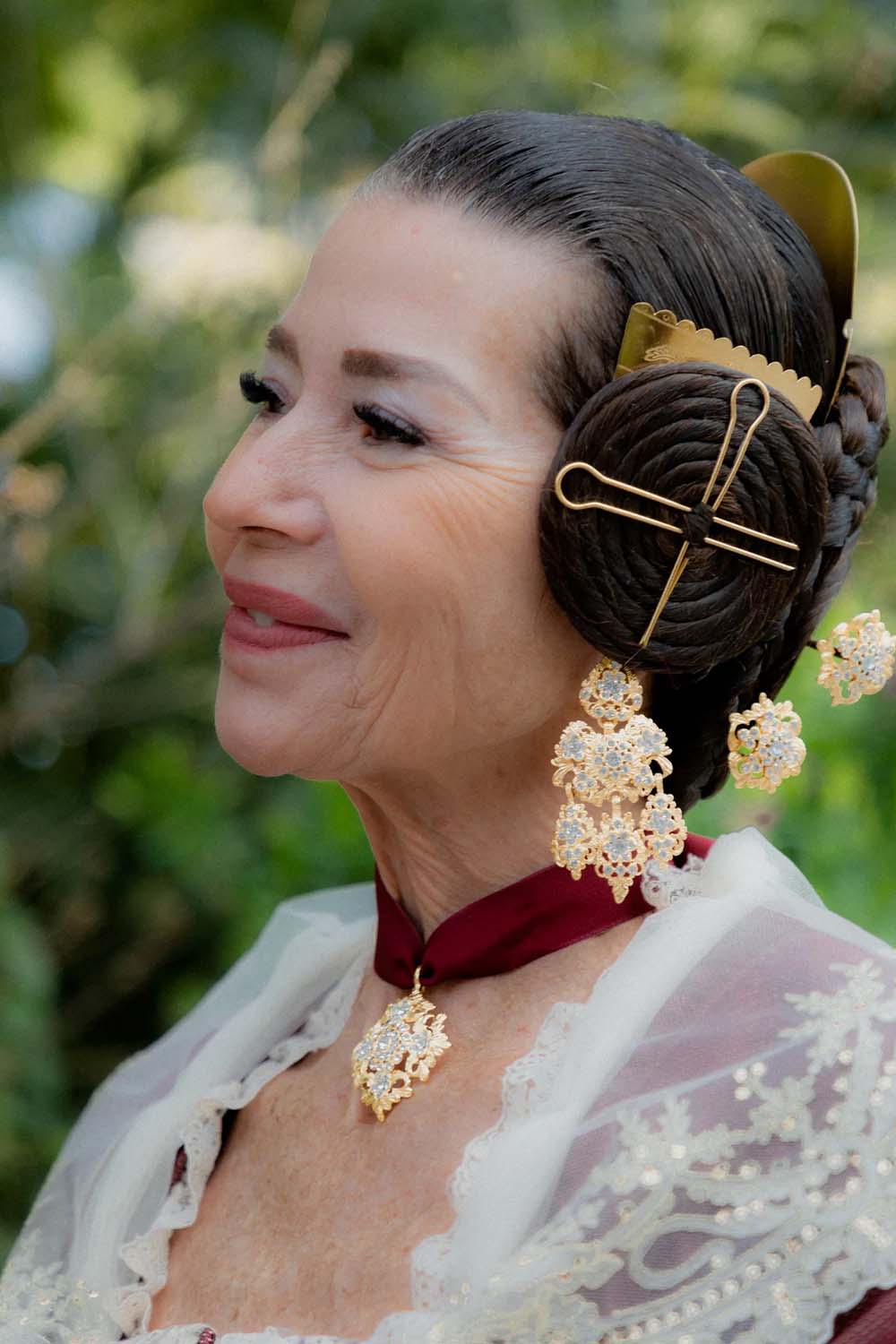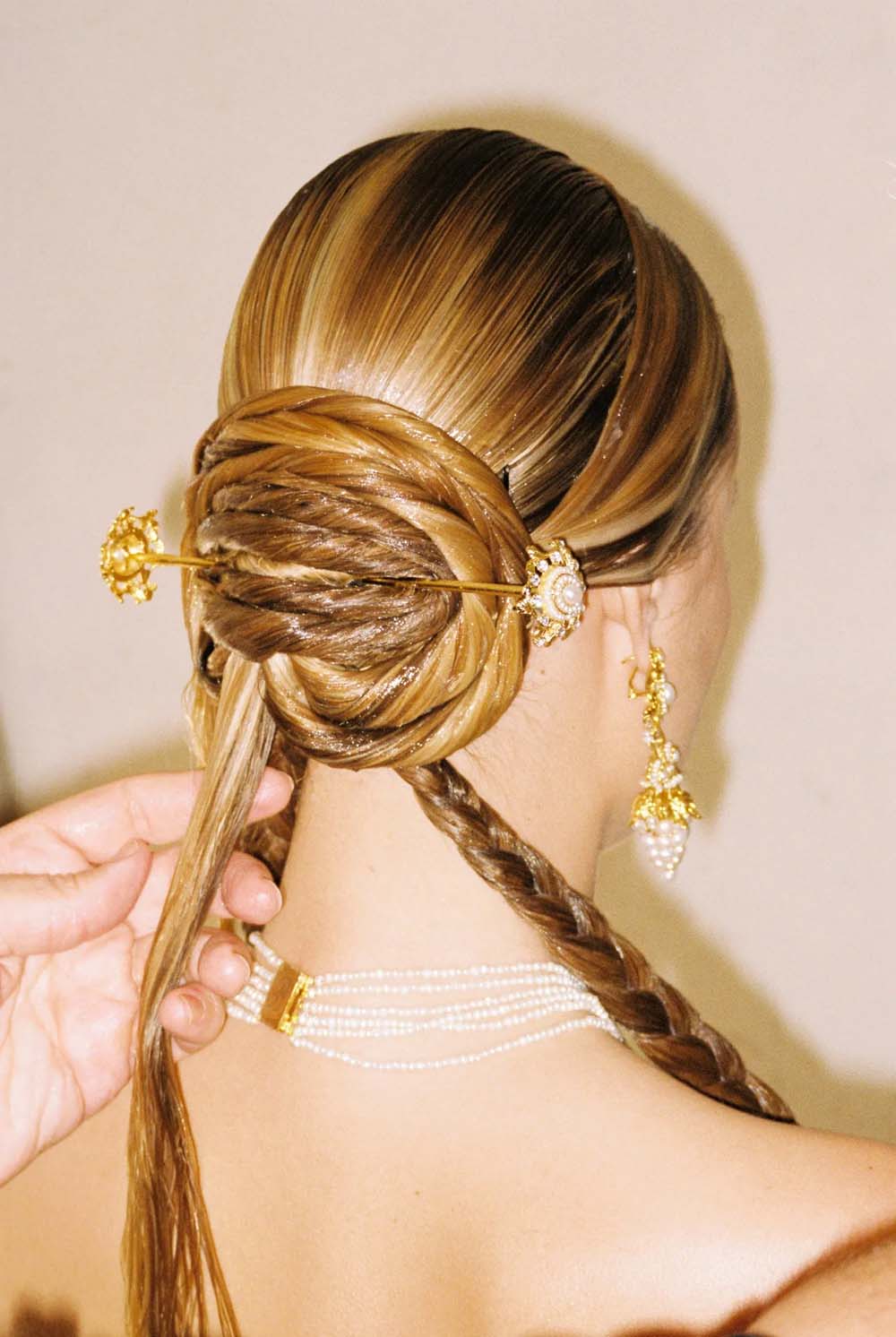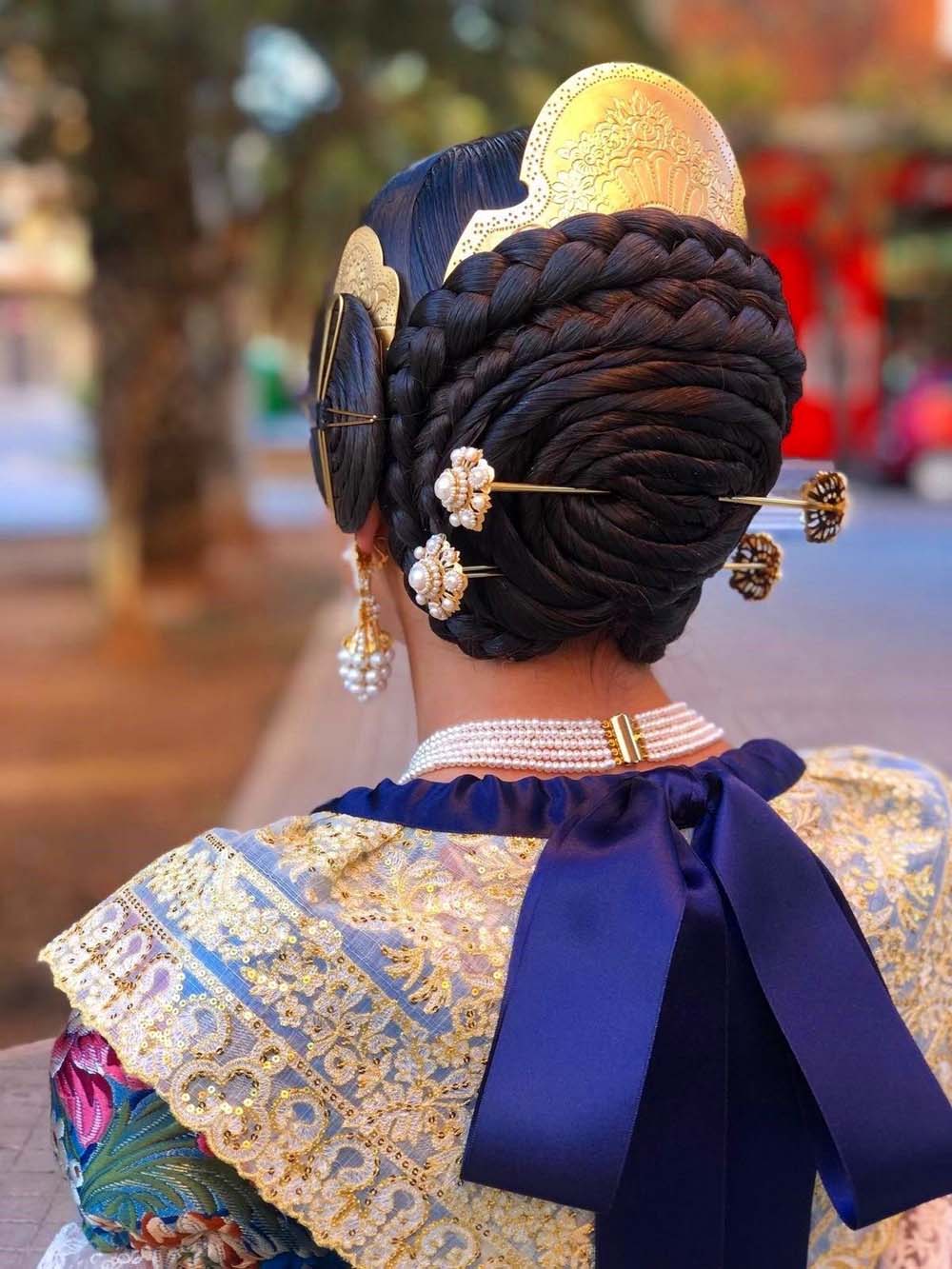

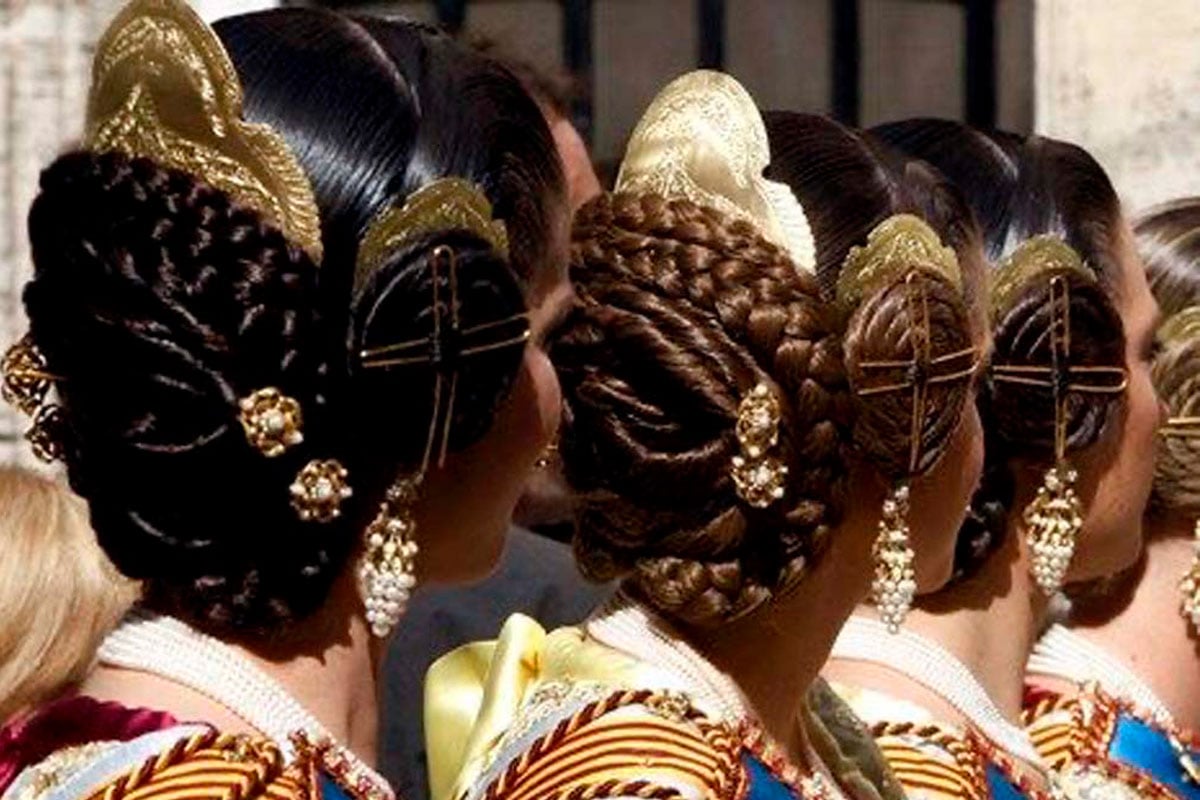
The Fallera hairstyle is a traditional Valencian hairstyle associated with Fallas de Valencia, or the Fiesta de San José, one of the country’s most notable annual street festivals. A Fallera is a woman elected by her barrio to represent them at the festival- some are familiar with this tradition from birth, continuing the legacy of several generations before them, while others explore the tradition later in life.
The origins of the Fallera hairstyle date as far back as the 18th century, modelled on working women on farms in Valencia. It is a living map of Valencia’s cultural heritage.
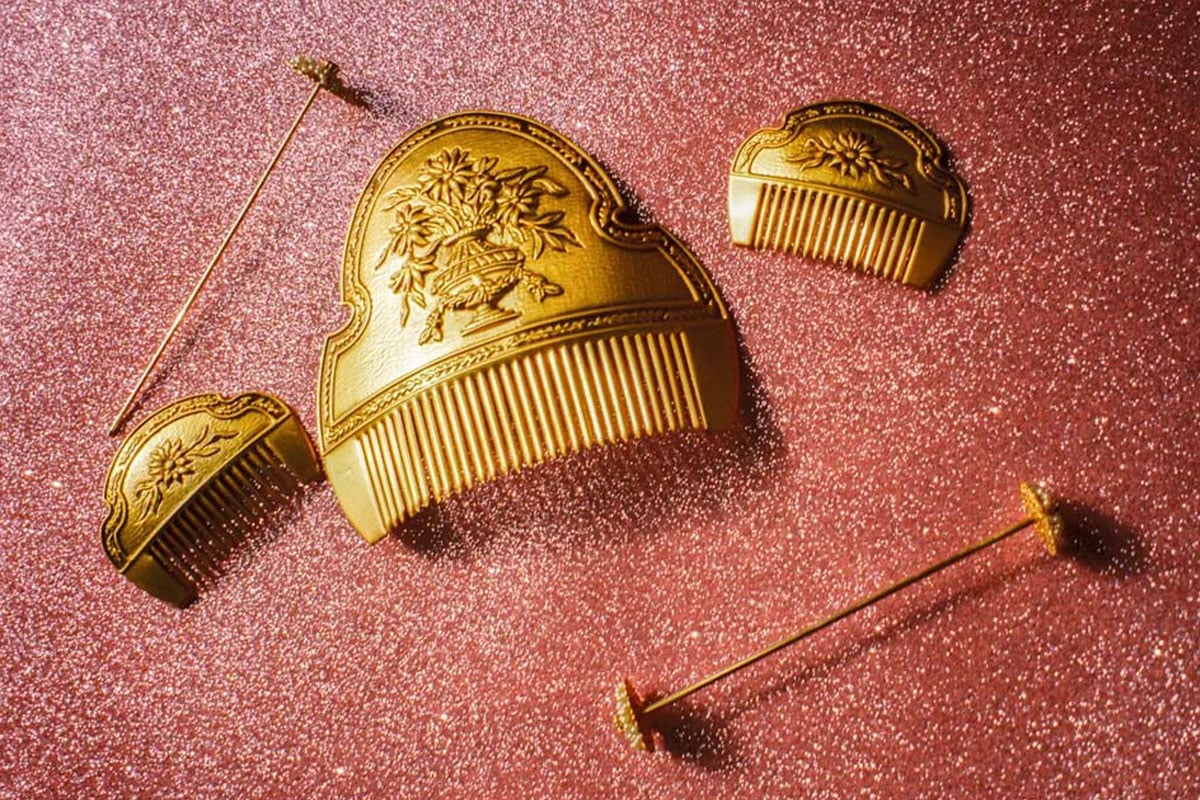
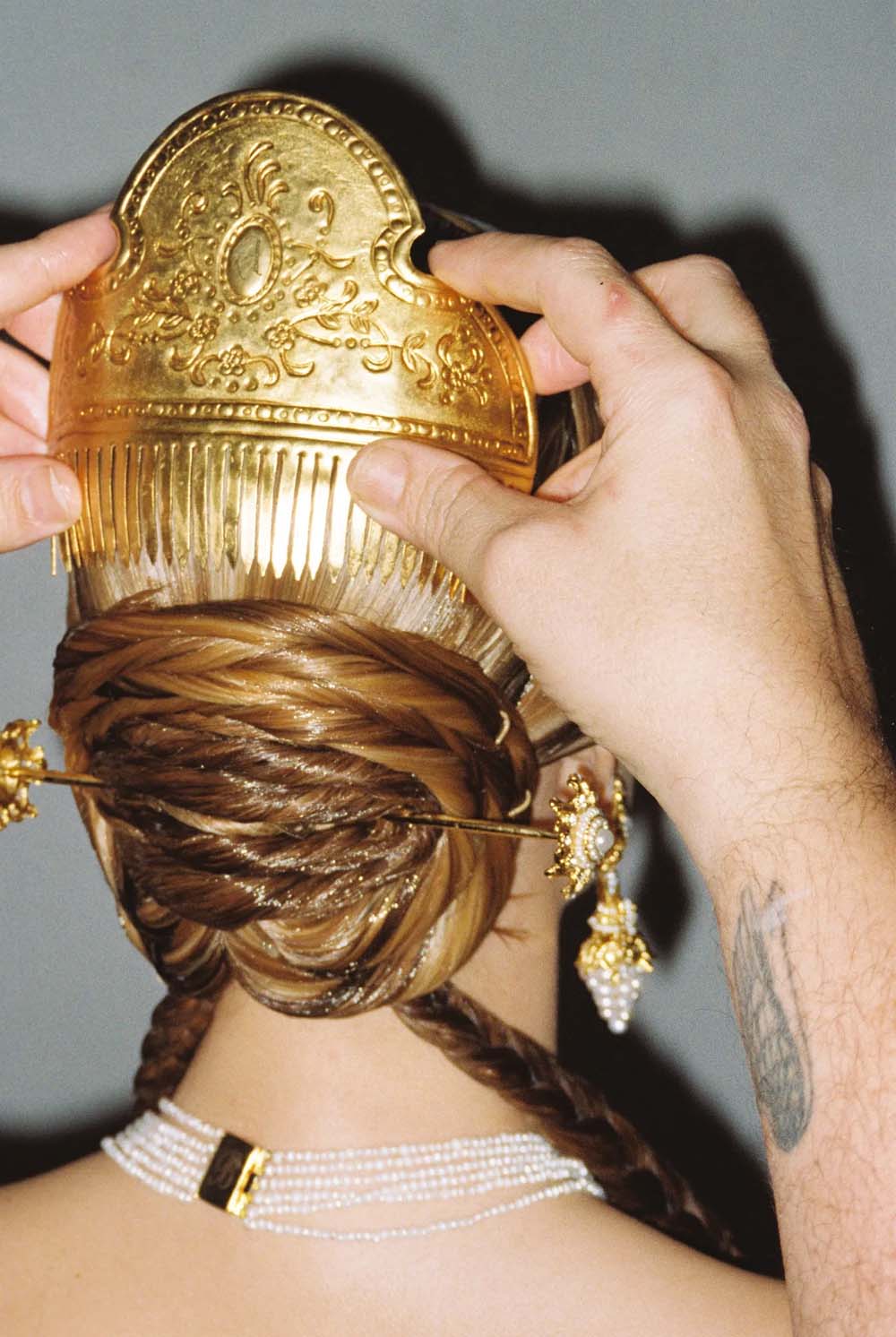
It evolved from historical hairstyles worn by Valencian women, particularly during the 18th and 19th centuries. It has many elements, including meticulously coiled buns on either side of the head and one at the back, secured with three intricate gold combs (peinetas) and pins that are often family heirlooms crafted by local artisans and passed down through generations. Modern renditions of the traditional hairstyle include using hairpieces that can be pre-styled and attached prior to the event and more minimal versions of the decorative pins.
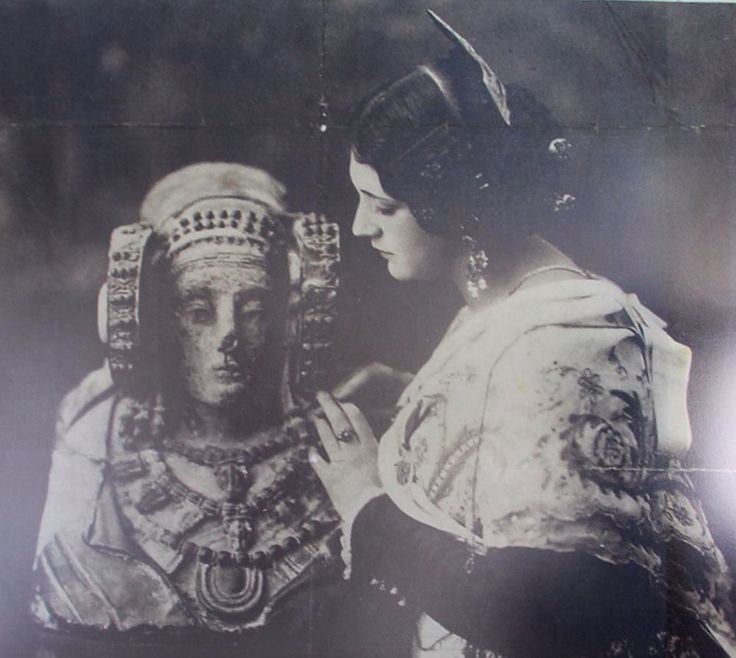
The popularisation of the traditional hairstyle could be attributed to Pepita Samper, the very first Miss Spain appointed in 1929, who chose to dress as a Fallera while attending her events, creating an iconic image with enduring influence. The Fallera hairstyle has visual similarities to ancient Mediterranean, Roman and Iberian ceremonial hairstyles and the tradition is still kept alive to this day, as witnessed in March every year.
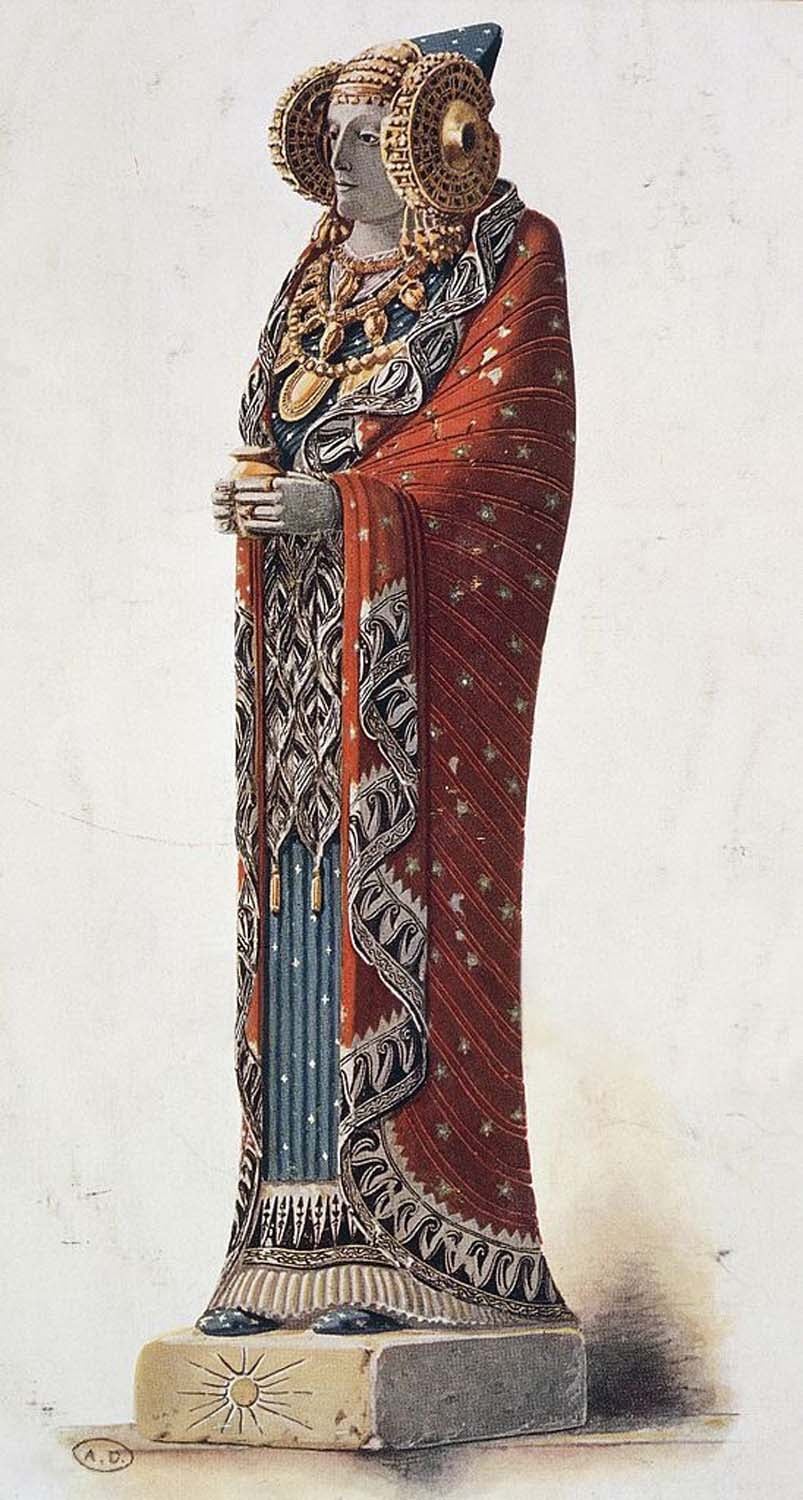
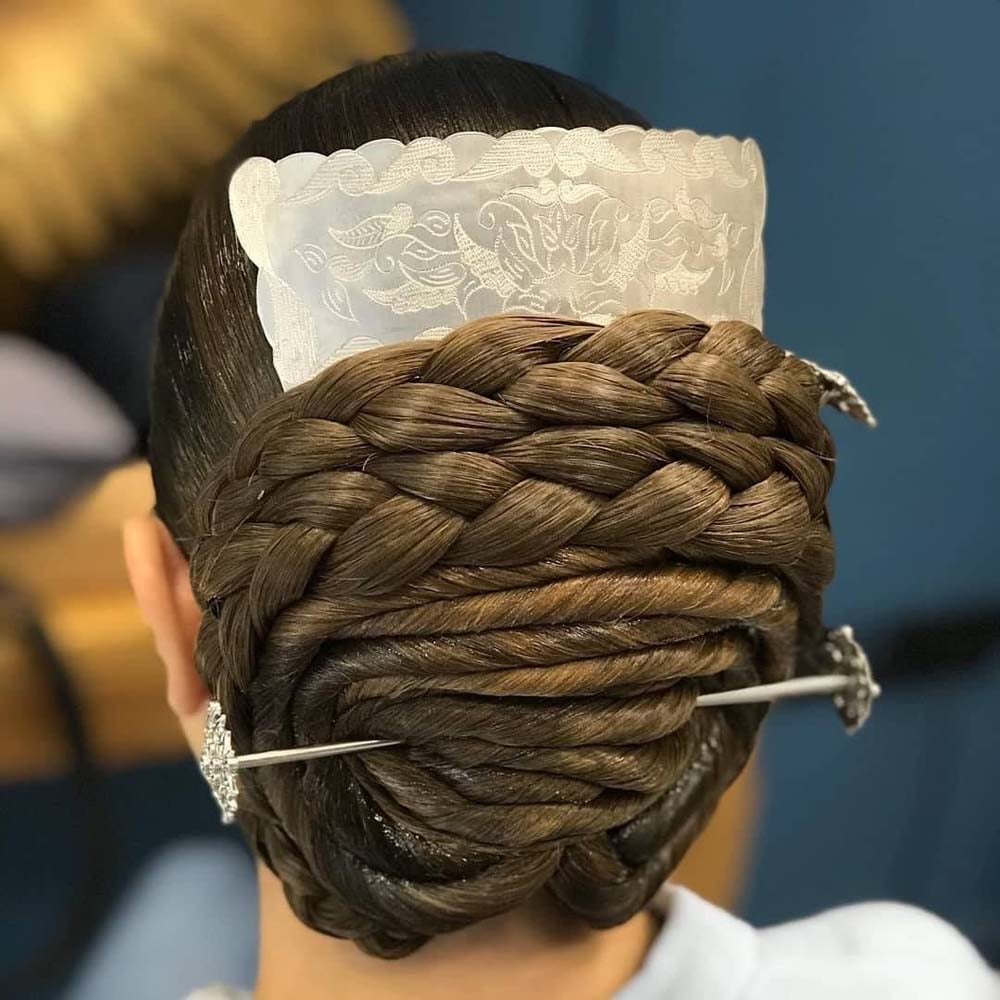
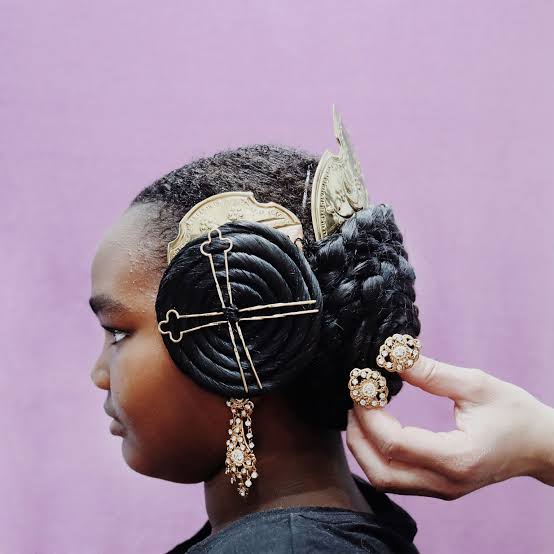
Image by Luisa Dörr