
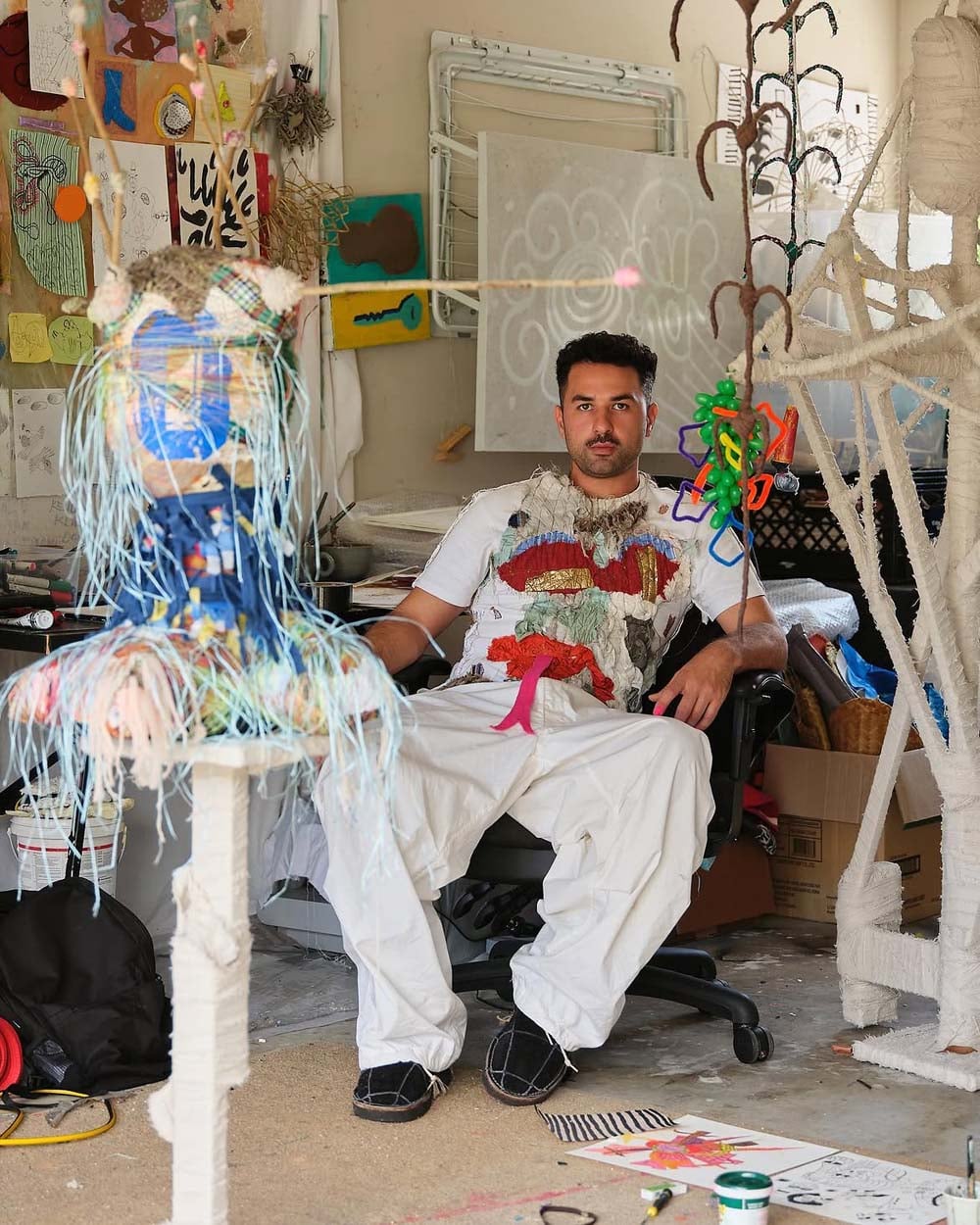
Tyrone Te Waa, Ngāti Tūwharetoa photographed by Samuel Hartnett.
Colleen has the pleasure of presenting one of Tyrone Te Waa's new work at the salon for a window viewing for Karangahape Art Weekend, courtesy of Anna Miles Gallery. Lauren chatted with Tyrone in the lead up about everything from his practice to champagne porridge to his newest wig-wielding work, Miss Tammy.
Its Sunday morning when I call Tyrone, currently residing in Taumarunui. The conversation naturally begins with breakfast.
TTW: I’m just having breakfast right now.
LG: Okay, what do you have for breakfast?
TTW: My oats, and then an egg, avocado toast, cup of tea.
LG: Oh, you really went for it. Oats, is it just a fancy way of saying porridge?
TTW: Yeah, porridge, but it's like a fancy porridge of like dates, cocoa powder, you can just like fill it up with heaps of stuff.
LG: I grew up on porridge and brown sugar.
TTW: Do you still get into it now?
LG: I can't go there. Do you recall when we first met?
TTW: Put some champagne on it. Maybe we came around for like dinner or something.
LG: Yeah. I think you did join for dinner. You were sharing a studio with Bella.
TTW: I recall some big, beautiful, long, like sort of photographic series that was framed on the wall.
LG: I think you're talking about The Smokers from Ava Seymour. I'm literally looking at that right now.
TTW: Yes, cheers to that. I raise my teeth for that.
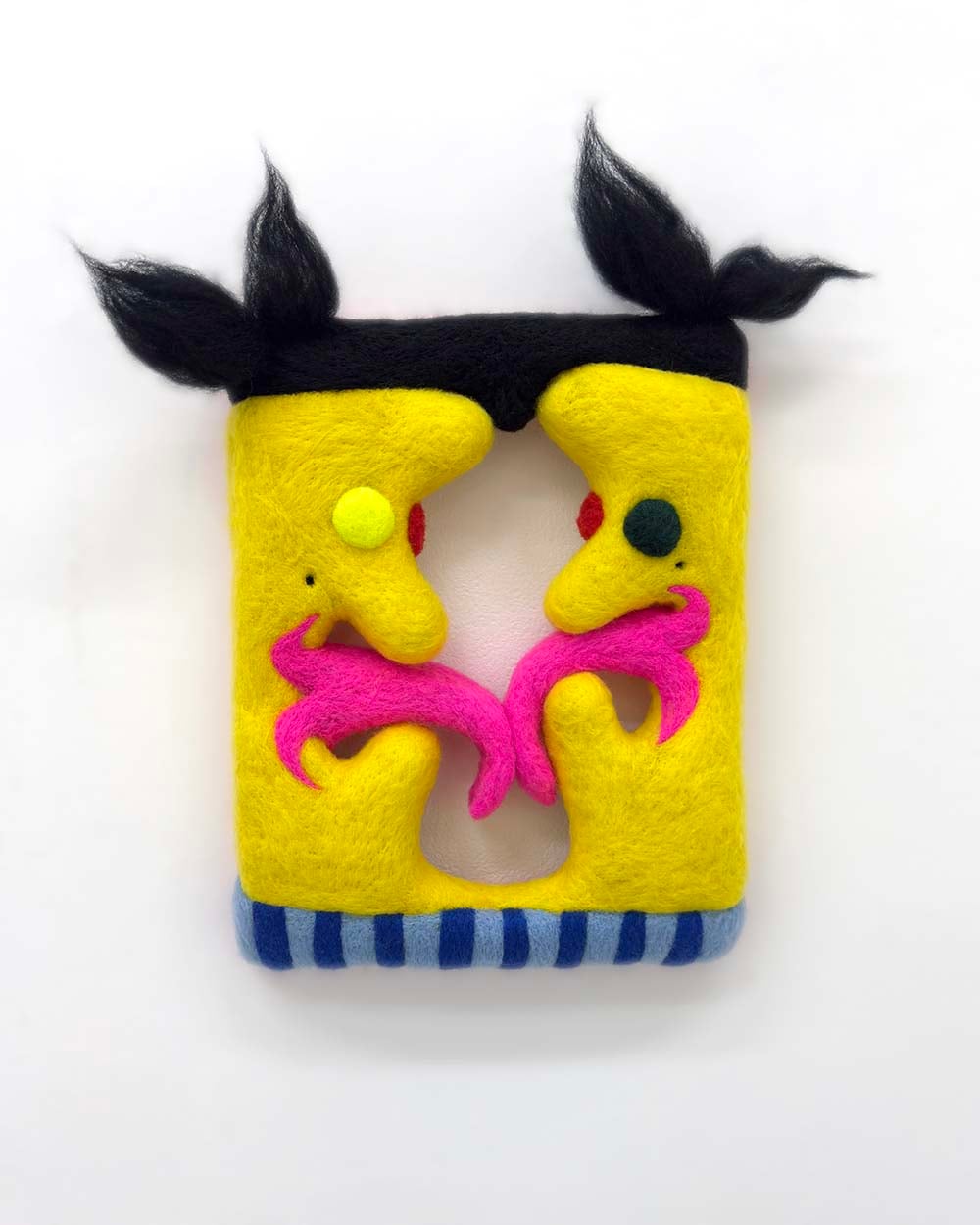
Tyrone Te Waa, Līōns Tōngūe, 2025. Image courtesy of Futures Gallery
LG: I remember going to the studio when you were about to finish your first show at Unitec, my first impression was of some kind of mythical monster that may or may not be alive. When I was thinking about talking with you there was a word that came to mind. Chimera. I looked it up, and the actual meaning is ‘an organism with multiple sets of DNA, or an impossible illusion of the mind’. Do you think there are multiple sets of DNA in your work?
TTW: Yeah, totally. I've actually been tracing that idea this year.
making stuff for me is like a meditative practice, and it's reflective: what's been consumed recently; then it's an output of that. it entangles with pop culture entangles with ancient ancestry or stories that I've been hearing in Taumarunui in this rural town, then mixing that with stuff that I just find interesting and beautiful.
LG: I read somewhere too that you sometimes forage materials. Hearing you talk about ancestry I was thinking about a type of foraging, but of the unconscious.
TTW: Yeah, you can kind of Frankenstein like things together with your ancestral stories. It gives you like, what's the word? Not ownership, but you're able to use all those stories however you like, you know, because they're yours. and they combine with other things that seem very like superficial or unrelated, it’s up to you as the person that owns those stories.
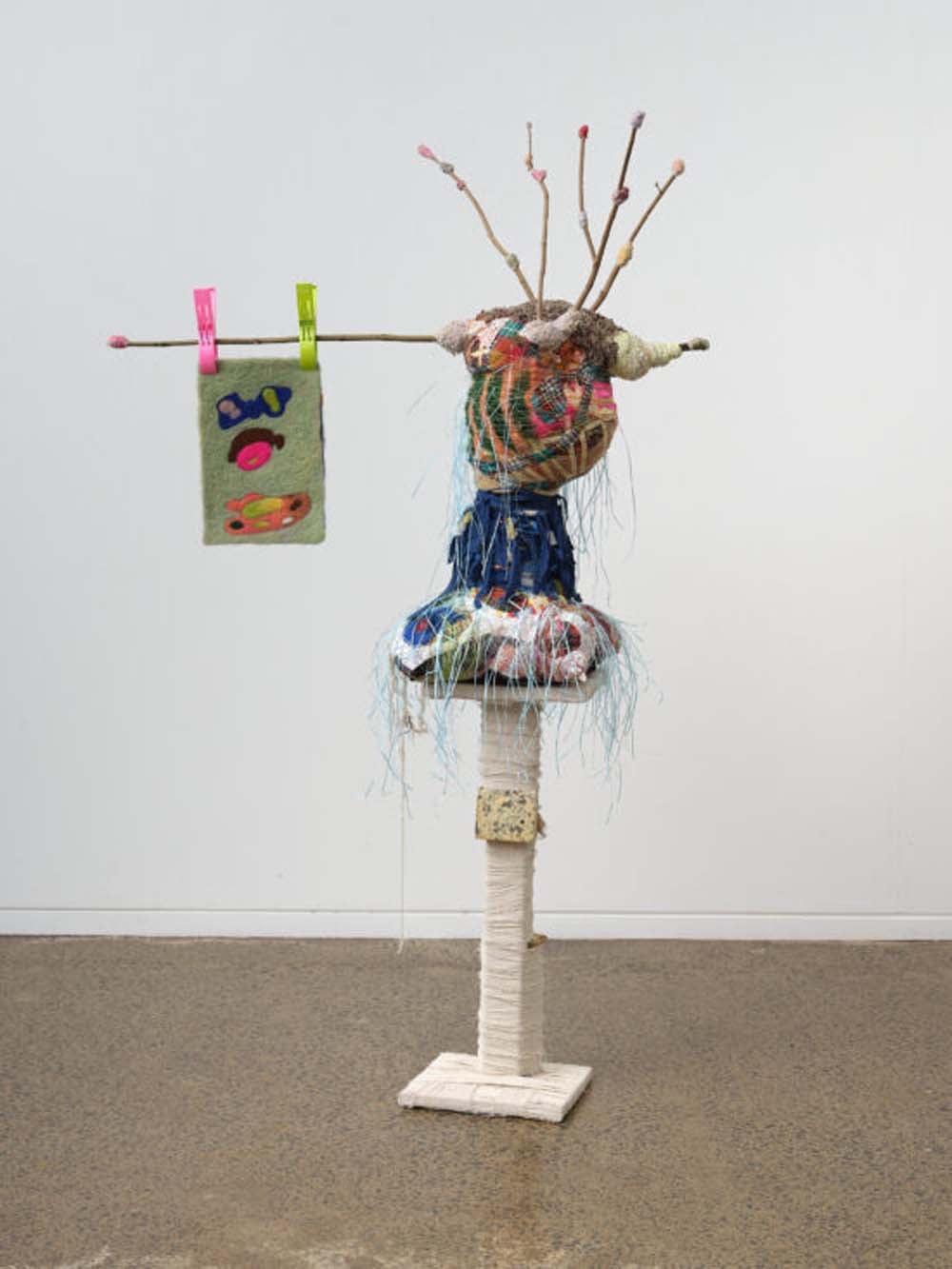
Image courtesy of Anna Miles Gallery.
LG: I've seen direct reference to your Māori heritage with the mattress show. I feel like they are pretty collectible and yet uncollectible.
TTW: Yo, yeah, I kind of love that. I love that about those works, it stems from trying to consider a painting practice but also devising the foundation of the painting practice. So as in, it's not just ‘we begin with a white stretch canvas that has gesso on it because that's what people paint on. I think you can make it deeper than that for any part of a practice. You create the foundational thing, and then it emerges from there. The single foam mattress is my canvas stretcher; those materials have deep association with the marae space.
LG: Do you find it hard to let go of work?
TTW: The ones that I really loved or had this like strange, deeper relationship with, they seem to stay with me, and I have works that just populate the studio, and they become like little icons for the new works that emerge.
LG: What comes first, material or form? Fabric or form?
TTW: nothing's ever first. I think it's always just like, you know, like a soup.
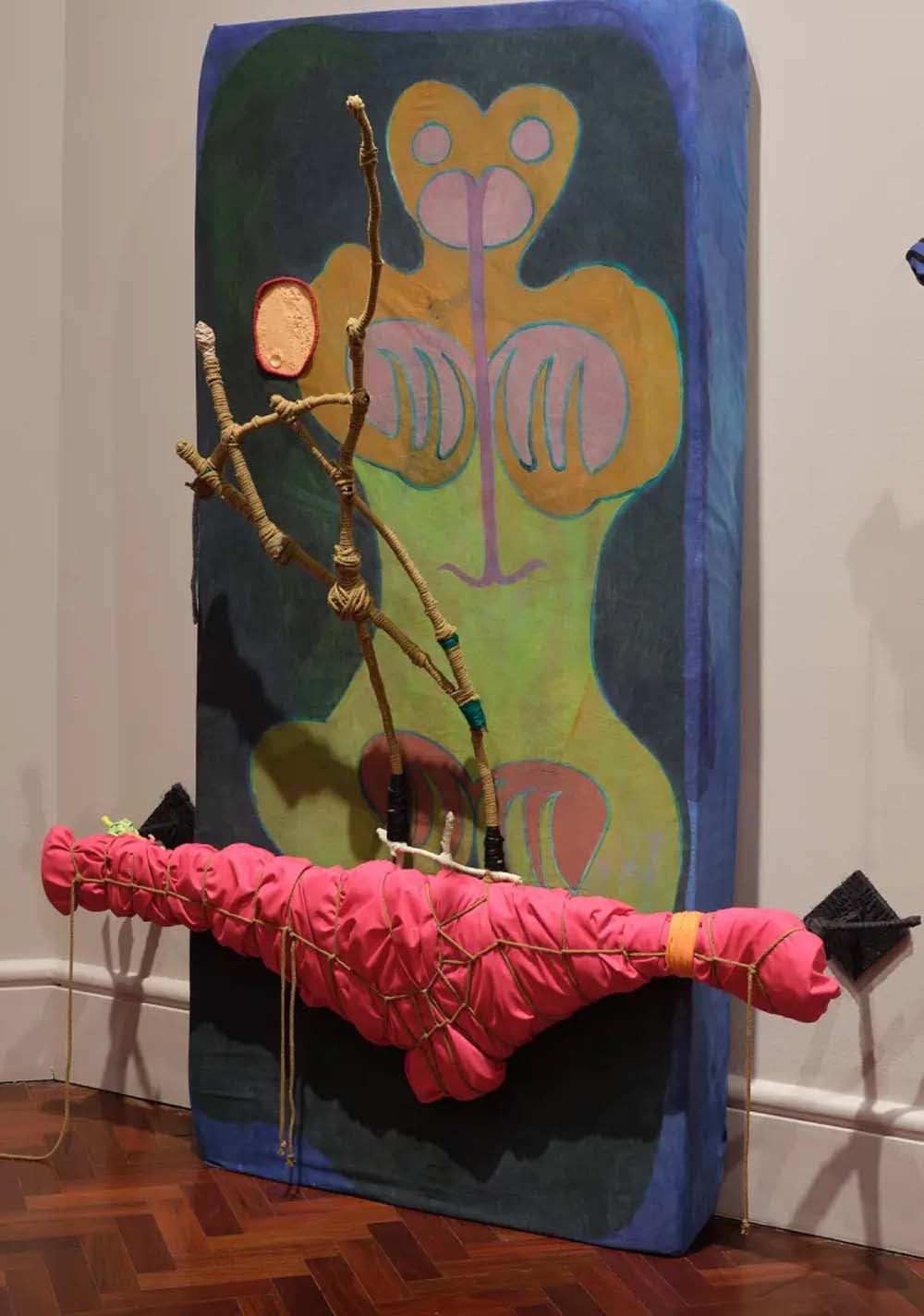
A Nan plays Whangaipeke, Image Courtesy of Tyrone Te Waa, Anna Miles Gallery, Gus Fisher Gallery, photographed by Sam Hartnett.
LG: Like a porridge, I feel like your sculptures take up a lot of space physically and psychologically. What is it about that?
TTW: Yeah, there's a sculptural practice of installation, and that is to inhabit space and to claim space.
Just considering the white plinth inside the white cube, it's like some sort of discussion of the gallery space.
There's generally separation that's created between white plinths and an artist's work, the separation of the work from the floor to sort of uplift, and then it's to consider the public monuments, the colonial monuments, and how those are displayed. So, I usually build the scaffold, and that braces itself on the walls, on the floor, and the ceiling. The work’s touching all those parts of the space,
it's supporting itself, as well and connecting the works to each other.
LG: If I look at your sculptures as being figurative, there is something nonverbal about them.
TTW: I’ve considered that in the past when I’ve used binding fabric and string. It’s a form of mummification, like old school Māori funeral practices where the bodies were bound and leant up against trees. So, I think of that, and then yeah, like cast broken bones. When you wrap and bind something in fabric tightly, it's for preservation. It's for healing. It's all of those kinds of things. Covering over something, hiding something, all of those key terms are embedded when I work with fabric and string like that.
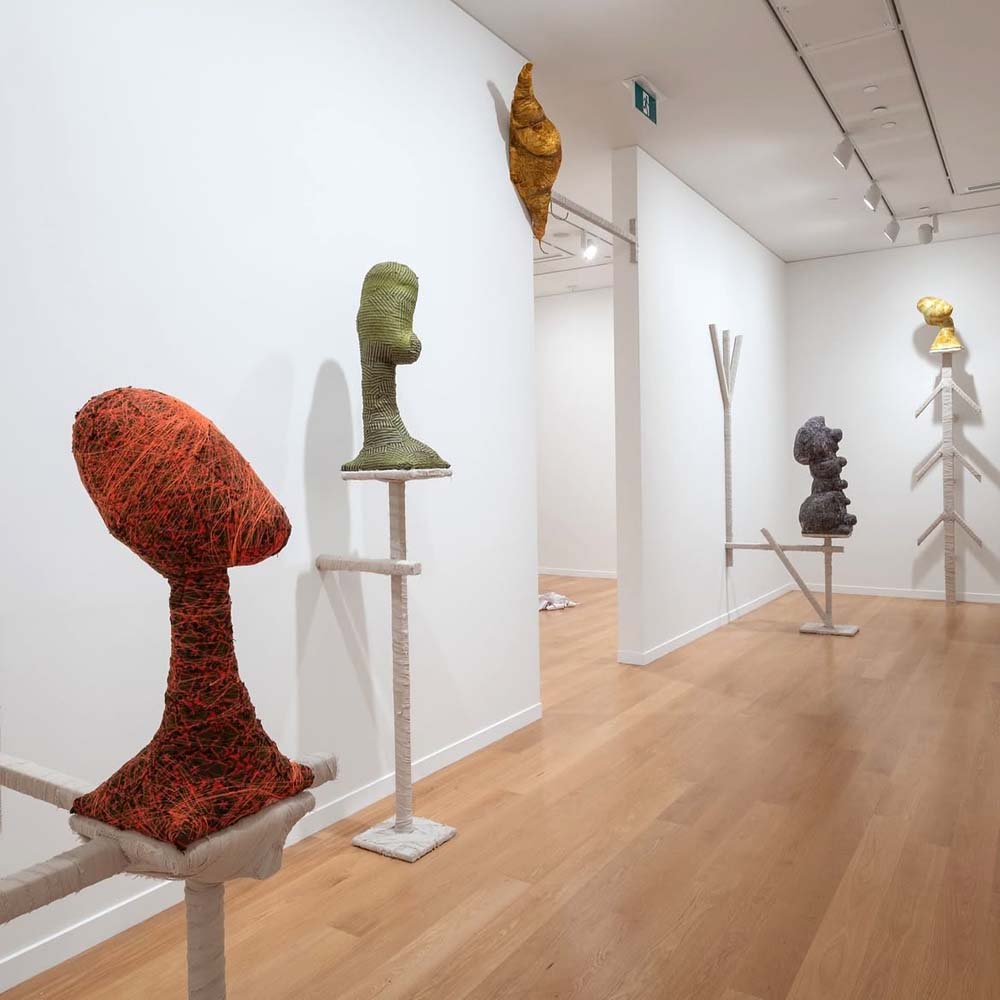
Tyrone Wahanui Te Waa (born 1992), ‘KUMARA KUĪNI (NZ IDOL) AWARDS CEREMONY’, 2024, metal, timber, fabric, thread, kōhatu (stone), wood, plant matter, found object, installation view, ‘Aotearoa Contemporary’, 2024. Commissioned by Auckland Art Gallery Toi o Tāmaki, 2024. Courtesy of the artist and Anna Miles Gallery.
LG: The work that is coming to colleen is quite spiky and shiny and feels like a departure from the permeable porous nature of what you've made before.
TTW: yeah, I've been working with bronze casting. I've had to find ways to seal the work, and everything's had to become hard and non-porous for the casting process to work. This work is part of that experiment of materials, but it's me revisiting these materials too. I usually have different materials that I play with separately, and sometimes there's moments where they get jammed together, and then they individualize themselves again.
Things becoming calcified and hardened kind of feels like that moment in time,
It still hasn't fully landed. And last night it kind of started looking like a bride. God! The veil over it. It’s got a wig on it. That was from Melbourne, like Footscray. Last year when I was over there I bought a bunch of wigs, so that one's finally getting its moment. That wig’s had like multiple lives. Cousin took it out to nightclubs, wig parties, up in Auckland. And then it's been returned to me, after that moment it's been to other parties in Melbourne, so now it's like, oh yo, it's coming back to Tamaki
LG: Back to Tamaki. Coming to the hair the salon.
TTW: Oh my gosh. Get her hair did
LG: Can we give her a blowout?
TTW: Mean, boy. I'd love that. And then she can go to Anna Miles with her new hair.
LG: Do you name your work?
TTW: So last night, my mate Claire was here, and we're singing on the mics, turns out that work's called, ‘Miss Tammy’. Miss Tammy. Yeah, last night she got her name, or she gave us her name, I should say.